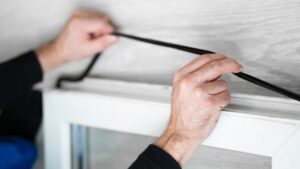
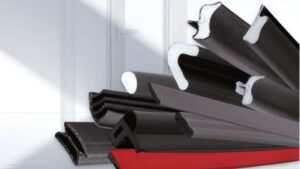
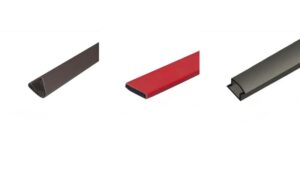
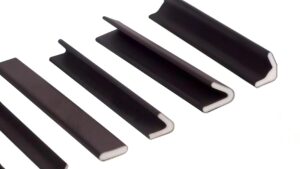
An intumescent seal expands when exposed to fire, helping close the gap between a door and its frame. However, coated, PVC, and PVC+EVA seals behave differently during normal use. Their carrier materials affect flexibility, wear resistance, gap coverage, installation, and closing comfort.
By comparing all three structures, you can choose a seal that suits your fire door design.
How the Three Intumescent Seal Types Differ
All three products contain a heat-reactive intumescent core. The main difference is the material that surrounds and protects that core.
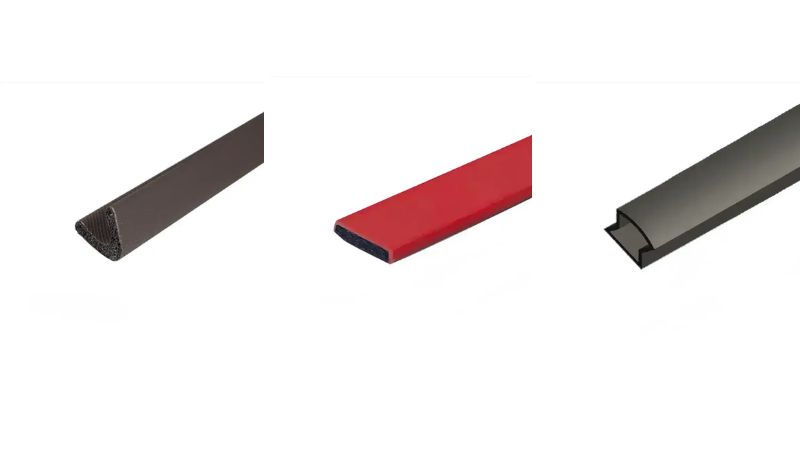
Coated Intumescent Seals
Winguard’s coated intumescent seals use a polyurethane foam body around the active fire-resistant material. The foam is soft, resilient, and compressible. During normal door use, it can cushion impact, reduce closing noise, and limit drafts.
This construction works well when you need both everyday sealing and passive fire protection. It can adapt to the door gap without creating the hard contact associated with a rigid carrier.
Coated seals are especially useful when you prioritize:
- Soft compression and impact absorption
- Quieter door operation
- Draught and acoustic control
- Adaptability to defined door clearances
- A less rigid contact surface
The foam body must still be protected from cuts, incorrect compression, paint buildup, and poor installation. You should select the profile according to the actual gap.
PVC Intumescent Seals
PVC intumescent seals place the active core inside a rigid or semi-rigid PVC carrier. This housing gives the seal a stable shape and protects the internal material from abrasion, moisture, cleaning, and frequent mechanical contact.
PVC is often a practical choice for high-traffic commercial doors. It is also suitable for profiles installed into a prepared channel or mortise. The rigid body helps the seal remain aligned within the frame.
You may prefer PVC when your project needs:
- Strong dimensional stability
- Resistance to daily wear
- Secure channel installation
- A clean and consistent visible finish
- Protection for the intumescent core
A rigid seal offers less cushioning than polyurethane foam. Your door gap, groove dimensions, and closing force must therefore be accurate.
PVC+EVA Intumescent Seals
PVC+EVA seals combine the shape retention of PVC with the softer and more elastic behavior of EVA. This creates a middle option between a foam-coated seal and a rigid PVC profile.
The PVC section supports surface durability. The EVA content improves flexibility, cushioning, and contact with the door perimeter. This can be useful when you need a substantial profile but do not want a completely hard closing surface.
PVC+EVA is a strong option when you need:
- More flexibility than standard PVC
- More structural support than soft foam
- A cushioned closing action
- Thick profiles for deeper spaces
- A balance of sealing and wear resistance
Full Performance Comparison and Selection Guide
You need to evaluate the doorset, gap, installation channel, traffic level, and required test evidence.
Coated vs PVC vs PVC+EVA Comparison
| Performance area | Coated polyurethane foam | PVC | PVC+EVA |
| Normal-use feel | Soft and highly compressible | Firm and stable | Semi-flexible and cushioned |
| Impact absorption | Strong | Limited compared with foam | Better than rigid PVC |
| Shape retention | Depends on correct compression | Very strong | Strong with added flexibility |
| Wear protection | Suitable for controlled contact | Well suited to high-traffic use | Good balance of wear and flexibility |
| Acoustic and draught sealing | Very good | Basic to moderate | Good |
| Installation style | Depends on profile; butt-seal designs are available | Often suitable for channels and grooves | Suitable for profile-specific channels and deeper sections |
| Gap suitability | Small to medium clearances, depending on model | Precise machined channels and slim profiles | Medium or deep profile requirements |
| Typical application | Doors needing quiet compression | Commercial and frequently used doors | Doors needing durability with softer contact |
| Main selection risk | Overcompression or surface damage | Incorrect groove or excessive closing resistance | Selecting the wrong hardness or body depth |
Match the Seal to the Complete Fire Door
A fire door’s performance depends on the door leaf, frame, hinges, closer, glazing, locks, seals, gaps, and installation.
Fire door assemblies are evaluated through large-scale tests, and components must match the applicable evidence, listing, or certification. Official guidance also recommends checking that seals are present, undamaged, and compatible with the tested door. Before approving a seal, confirm:
- Required fire and smoke rating: Determine whether the project needs fire containment only or combined fire-and-smoke control.
- Door and frame material: Timber, steel, composite, and glazed doors may use different seal arrangements.
- Actual gap dimensions: Measure the clearance at several points. Do not rely only on the drawing.
- Groove size: For recessed installation, the profile must match the channel width and depth.
- Door movement: Confirm whether the doors are swinging, sliding, single-leaf, or double-leaf.
- Daily traffic: A school, hospital, hotel, or commercial entrance may need stronger mechanical protection than a low-use internal door.
- Test evidence: Verify that the seal type, dimensions, position, and installation method are covered by the relevant doorset documentation.
Choose by Daily Performance as Well as Fire Response
The seal remains on the door for years before it may ever face a fire. Its everyday behavior therefore matters.
Choose a coated foam seal when quiet operation and soft compression are major priorities. Choose PVC when the seal will face frequent contact, cleaning, or abrasion. Choose PVC+EVA when you need a stable body with a more forgiving contact surface.
You should also inspect installed seals regularly. Replace any seal that is missing, detached, painted over incorrectly, deeply compressed, cut, or damaged. Fire-door guidance emphasizes keeping seals intact and ensuring the door continues to close correctly.
Cooperate with Winguard for Your Project
Winguard has manufactured sealing products since 1994. Our 15,000-plus-square-meter facility supports raw-material, hardness, swelling, and expansion testing. We also archive approved formulas, retain labeled batch samples, and offer OEM and ODM control over profile, dimensions, color, hardness, and length.
Contact us today to select or customize a coated, PVC, or PVC+EVA intumescent seal with professional profile development, controlled production, batch traceability, and technical support.
Recommended Intumescent Seal Models
Coated Intumescent Seals
- XHM212F Coated Intumescent Seal: A 12 mm polyurethane foam seal for 1.5–2.0 mm clearances. It provides soft compression, acoustic damping, and heat-activated expansion.
- XHM218F Coated Butt Seal: A 13 mm profile for larger gaps from 4.8 to 6.5 mm. It is suitable when you need impact absorption and softer contact on swinging or sliding doors.
PVC Intumescent Seals
- XHF301 PVC Intumescent Seal: A compact 10 mm model with a durable PVC housing. It is designed for standard channels and high-traffic entrance or interior doors.
- XHF307 Deep-Groove PVC Intumescent Seal: An 18 mm seal for a 7.5 × 8 mm channel. Its deeper mounting profile supports secure installation in demanding fire-door systems.
PVC+EVA Intumescent Seals
- XHF01 PVC+EVA Intumescent Seal: A 14 mm hybrid profile that combines PVC protection with EVA cushioning. It suits projects needing stability, flexibility, and quieter contact.
- XHF26 Heavy-Section PVC+EVA Seal: A 12 × 12 mm profile for doors requiring a fuller sealing body and greater edge coverage.
Frequently Asked Questions
Are coated intumescent seals better than PVC seals?
Not in every application. Coated polyurethane foam provides softer compression and better cushioning. PVC gives you stronger shape retention and wear protection. The better choice depends on your gap, groove, door traffic, and tested doorset specification.
What does EVA add to a PVC fire seal?
EVA adds flexibility and cushioning. It makes the seal less rigid while PVC continues to provide structure and surface protection.
Can you replace a PVC seal with a coated seal of the same width?
Not automatically. Equal width does not mean equal performance. The two products may have different thicknesses, compression behavior, expansion direction, and installation requirements. Any replacement should match the door’s test evidence.
Do intumescent seals stop cold smoke before a fire?
The expanding core reacts to high temperatures, so it is mainly intended for fire conditions. Cold-smoke control may require a suitable smoke-sealing feature. Confirm the complete product construction and doorset requirements before ordering.
Can you cut an intumescent seal during installation?
Profiles are normally cut to the required door length, but you should follow the supplier’s instructions. Avoid stretching, crushing, or leaving gaps at corners and joints.
How often should fire-door seals be inspected?
Inspection intervals depend on local rules and building use. You should check them regularly for damage, detachment, missing sections, and excessive paint. Frequently used communal fire doors may require more frequent inspection.