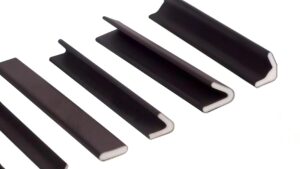
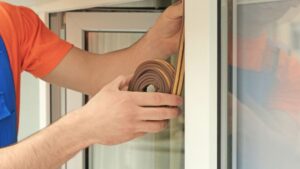
A door seal manufacturer produces sealing products in its own factory. A trading company normally purchases products from one or more factories and resells them to you.
If you need a standard seal in a small quantity, a trading company may offer convenient sourcing. If you need a custom profile, tighter quality control, tooling development, or repeat bulk orders, working directly with a door seal manufacturer can give you more control.
Key Differences
Product Development and Customization
Customization is often where the difference becomes obvious.
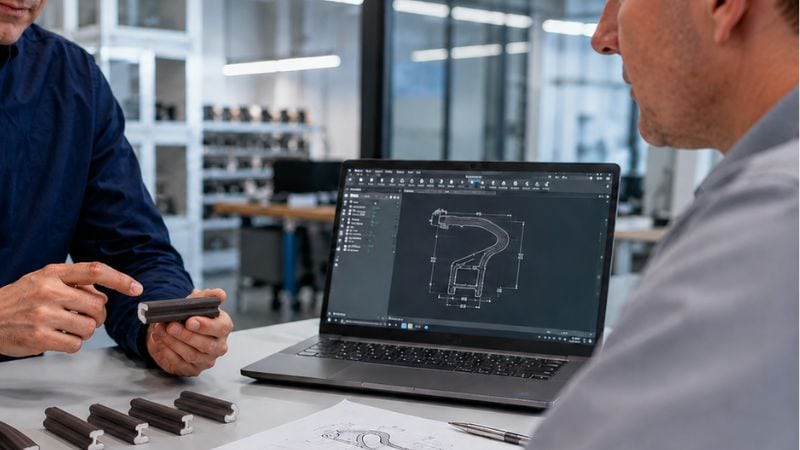
Suppose you send a drawing for a new TPE sealing profile. You need to discuss:
- Cross-section dimensions
- Groove size
- Material
- Shore hardness
- Compression
- Tolerances
- Tooling
- Surface treatment
- Color
- Packing length
When you work directly with a manufacturer, your requirements can usually move directly from the sales team to engineers and production staff.
If there is a problem with the profile, the factory can review the drawing, extrusion process, tooling, or material formula.
A trading company normally needs to pass the information to a third-party factory. The process can still work, but there is another communication layer between you and the production team.
This becomes important when you are developing a custom door seal rather than purchasing a standard catalog item.
Winguard, for example, supports OEM and ODM customization based on drawings or samples. Cross-section, dimensions, color, hardness, and length can all be customized.
Quality Control and Traceability
When you buy thousands of meters of sealing profiles, consistency matters as much as the first sample.
You need the profile produced six months later to match the approved sample.
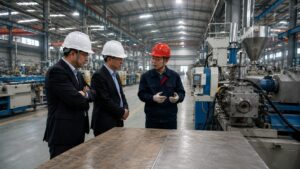
A manufacturer can control more steps inside its own production system. These may include raw-material inspection, material mixing, extrusion, molding, bonding, hardness testing, dimensional checks, packing, and batch records.
A trading company can also manage quality control. Some have strong supplier-management systems and third-party inspectors. However, you should ask who actually performs the inspections and where they take place.
For custom seals, ask questions such as:
- Is every batch checked?
- Which dimensions are measured?
- How is hardness tested?
- Is the material formula fixed after approval?
- Are samples retained from each production batch?
- Can you trace a complaint back to a production lot?
Price and Cost Structure
Buying directly from a manufacturer can remove one layer from the supply chain.
A trading company may combine orders from several customers, negotiate volume prices, or accept smaller quantities.
However, direct manufacturing can become more attractive when your order quantity increases.
You can also discuss tooling, material changes, packaging, production quantities, and annual forecasts directly with the party making the product.
For custom programs, this can make cost discussions clearer.
| Sourcing factor | Door seal manufacturer | Trading company |
| Production | Own factory | Outsourced to factories |
| Custom profile development | Direct engineering communication | Usually communicated through another supplier |
| Tooling control | Usually direct | Depends on partner factory |
| Quality traceability | Direct production records possible | Depends on supplier-management system |
| Standard small orders | May have MOQ limits | Often flexible |
| Multi-category sourcing | Focused on factory’s product range | Often stronger |
| Bulk repeat orders | Usually strong | Depends on factory relationship |
| Technical problem solving | Direct access to production | Additional communication layer |
| Factory audit | Production site can be inspected | You may need to audit the actual supplier separately |
How to Verify Whether Your Door Seal Supplier Is a Real Manufacturer
You should verify the production capability yourself.
Ask to See the Production Process
For sealing profiles, you may expect to see areas related to material preparation, extrusion, molding, coating or bonding, cutting, inspection, and packaging.
Ask for:
- Factory photos
- Video factory tours
- Machine lists
- Production-line information
- Factory audit reports
- Quality-control equipment
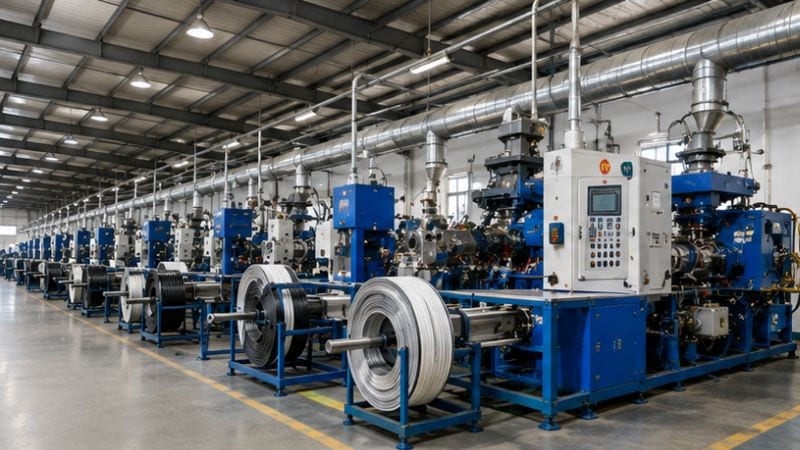
If your annual purchasing volume is high, an on-site factory audit can be worthwhile.
Ask Technical Questions
A useful way to identify a manufacturer’s real capability is to ask questions that require production knowledge.
For example:
“What tolerance can you maintain on this mounting foot?”
“What hardness do you recommend for this compression range?”
“Does this profile need a new extrusion die?”
“Can you make one profile with two different hardness levels?”
“What information do you need before producing samples?”
Confirm Who Owns the Tooling
Tooling is particularly important for custom door seals.
Ask:
- Where will the tooling be produced?
- Where will it be stored?
- Who owns it after you pay the tooling fee?
- Can it be used by another customer?
- What happens if you change suppliers?
- Can the tooling be modified after sample testing?
If you are working with a trading company, also ask which factory physically holds the tooling.
This becomes important when your custom profile is expected to remain in production for several years.
Compare MOQ and Lead Time Carefully
Factories usually need to consider machine setup, material preparation, extrusion efficiency, and production scheduling.
Trading companies may sometimes offer lower quantities because they combine orders or purchase from factories that already produce similar profiles.
For custom products, do not judge suppliers only by the lowest MOQ.
Consider the complete program:
sample → approval → tooling → trial order → mass production → repeat orders
These are useful details to confirm with the supplier again for your specific project.
Work With an Experienced Door Seal Manufacturer – Winguard
If you need more than a standard weatherstrip, direct manufacturing capability can make your sourcing process much easier.
Winguard is a sealing-strip manufacturer producing coated PU weather strips, TPE sealing profiles, intumescent fire seals, and customized sealing profiles for door and window applications. Our factory integrates production, R&D, sales, and after-sales support.
Whether you have an existing sample or a new profile drawing, you can send your cross-section, dimensions, material requirements, annual quantity, and application information for evaluation.
Contact us today to discuss your door seal project, request samples, or get a quotation.
Frequently Asked Questions
Is It Always Better to Buy Directly From a Manufacturer?
No. A trading company can be useful if you need many different products from several factories, small quantities, consolidated shipments, or one supplier to manage multiple product categories.
A direct manufacturer is often more suitable when sealing products are a major part of your purchasing program.
When Should You Choose a Door Seal Manufacturer?
You should strongly consider a manufacturer when you need:
- Custom sealing profiles
- New tooling
- Specific materials or hardness
- Tight dimensional control
- Large repeat orders
- Private-label packaging
- Stable batch consistency
- Technical support
The more customized your project becomes, the more valuable direct factory communication can be.
Can a Trading Company Provide Custom Door Seals?
Yes. Many trading companies have long-term relationships with extrusion factories and can manage custom projects successfully.
You should still identify the actual manufacturer and understand who controls your tooling, drawings, material specification, and quality records.
How Can You Check Whether a Supplier Owns a Factory?
Ask for production videos, factory registration information, machine lists, quality-control equipment, and a live video tour.
For important projects, arrange an independent or in-person factory audit.
Do not make your decision from website photos alone.
Why Does Batch Traceability Matter for Door Seals?
A door seal may be reordered many times during the life of a door system.
If a quality issue appears, batch information helps the manufacturer identify when the seal was produced and investigate the production conditions.
Good traceability also makes repeat orders easier to control.
Should You Choose the Supplier With the Lowest Price?
Not necessarily. For B2B door-seal sourcing, consider the total cost of the project.
A cheaper seal can become expensive if you later face poor groove fit, inconsistent hardness, production delays, high defect rates, or repeated customer complaints.
You should compare price together with manufacturing capability, quality control, customization, delivery reliability, and technical support.