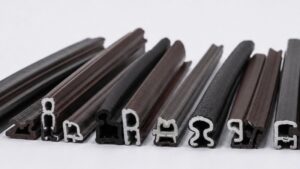
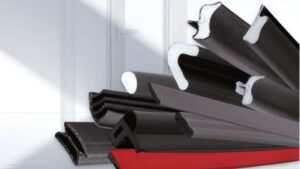
Choosing between different door weatherstripping types affects closing force, indoor noise, water resistance, dust control, energy efficiency, and long-term door performance. Coated polyurethane foam strips, TPE seals, and intumescent fire seals serve different purposes. By comparing their materials, profiles, and installation requirements, you can select a seal that fits your door.
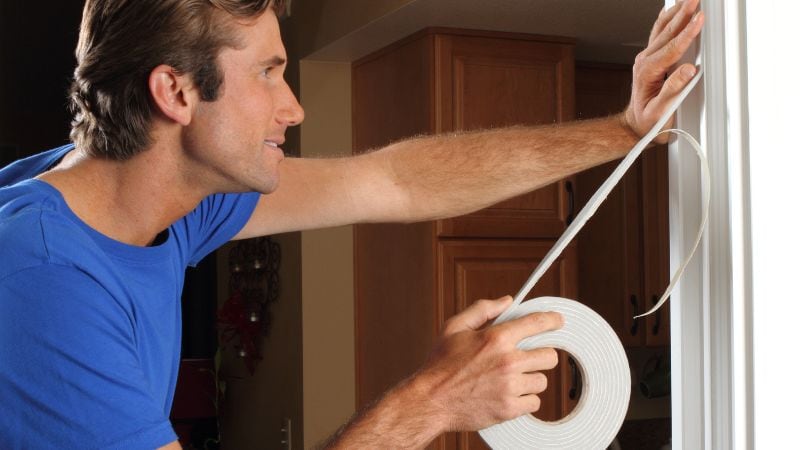
Main Door Weatherstripping Types and Functions
The right seal depends on the gap, door movement, exposure conditions, and required protection.
Coated Polyurethane Foam Weather Strips
A coated weather strip uses a soft polyurethane foam core with a protective outer layer. The foam compresses when the door closes and recovers when the door opens. This creates gentle and continuous contact along the frame.
Winguard’s coated weather strips use profile-specific dimensions for entrance doors, interior doors, furniture, sliding systems, and selected window applications. The coating protects the foam against moisture, wear, ultraviolet exposure, and aging.
Coated foam is useful when you need:
- Low door-closing resistance
- Quiet contact between the door and frame
- Good adjustment to slightly uneven gaps
- Protection against drafts, dust, and noise
- A concealed kerf-slot or neat butt-seal installation
The main advantage is comfort. A soft foam strip can provide firm contact without making the door difficult to latch. This is valuable for hotel rooms, apartments, offices, wardrobes, and premium interior doors.
However, you must use the correct compression range. A strip that is too small will not maintain contact.
TPE Door Seals
TPE stands for thermoplastic elastomer. It combines rubber-like flexibility with the production advantages of a thermoplastic material. A TPE seal is extruded directly into its required cross-section.
Winguard’s TPE seal range includes flat, hollow, multi-cavity, and shaped profiles. These products are designed for doors, windows, glazing frames, balcony systems, and other architectural sealing applications.
A TPE profile can include:
- Hollow chambers for softer compression
- Wide lips for greater surface contact
- Ribs for secure groove installation
- Flat sections for narrow frame edges
- Different hardness levels for controlled closing force
TPE is often suitable when the seal is an engineered part of the frame. Its cross-section can be designed around an aluminum, timber, PVC, steel, or composite door system.
Modified TPE can also offer resistance to sunlight, temperature changes, abrasion, and aging.
Intumescent Fire Seals
Fire seals are a specialized category. They should not be treated as ordinary draught strips, even though some profiles may provide limited everyday cushioning.
An intumescent seal contains a material that expands when exposed to high temperatures. During a fire, the expanding core fills the gap between the door and frame. This helps restrict the passage of flames and hot gases.
Winguard’s fire-seal collection includes coated intumescent seals, PVC-carrier profiles, and PVC+EVA structures. The carrier protects the active core and keeps it in position during daily door operation.
You must select fire seals according to the tested fire-door specification. Intumescent materials can have different expansion behavior, and a fire door works as a complete assembly. The door leaf, frame, hardware, seals, gaps, and glazing must remain compatible with the approved system.
Door Weatherstripping Types Compared
| Seal type | Main construction | Primary function | Best applications | Key point to check |
| Coated foam strip | PU foam with protective coating | Soft draught, dust, noise, and impact sealing | Interior doors, entrance doors and furniture | Compression range and coating condition |
| TPE seal | Extruded thermoplastic elastomer | Weather, thermal, acoustic, and frame sealing | Exterior doors, windows and engineered frames | Hardness and cross-sectional dimensions |
| Intumescent fire seal | Heat-reactive core with coated, PVC, or PVC+EVA carrier | Fire and hot-gas containment | Tested fire-door assemblies | Certification and doorset compatibility |
| Combined fire and smoke seal | Intumescent core plus smoke-control feature | Fire protection and early smoke control | Fire doors requiring smoke resistance | Complete test evidence |
How to Choose Between Door Weatherstripping Types
You should begin with the opening, the frame design, and the required performance.
Measure the Gap and Groove
Measure the clearance between the door and frame at several points. Do not rely only on a drawing or one measurement near the lock.
Doors may be slightly misaligned. Timber can change with humidity. Frames may also vary after installation. Your seal should cover the real minimum and maximum gap without excessive compression.
For a kerf-mounted strip, confirm:
- Groove width
- Groove depth
- Available compression space
- Direction of the mounting foot
- Corner and joint arrangement
For example, the Winguard XHM325 is designed for a 5.5 mm groove and installation spaces from 3 to 4.5 mm. Its coated foam structure provides soft contact for interior doors and furniture.
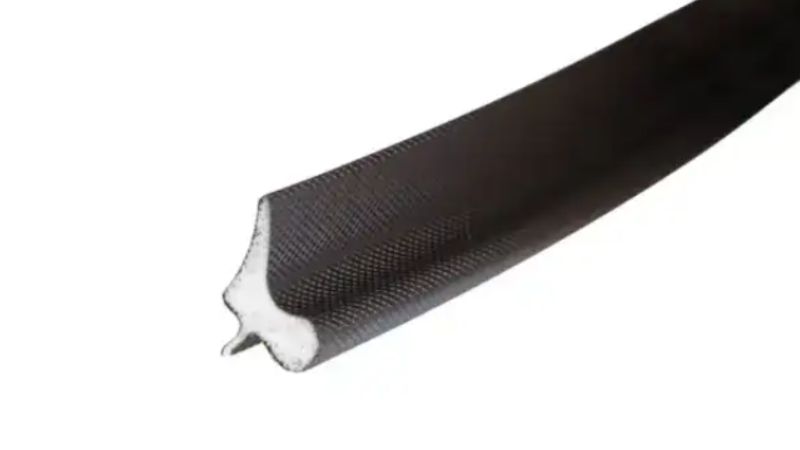
TPE profiles require equally careful measurement. A small change in wall thickness or cavity shape can greatly affect closing force. If you are developing a new frame system, send your supplier a detailed cross-sectional drawing.
Match the Seal to Door Use
For an interior bedroom or hotel door, quiet closing and acoustic comfort may be your priorities. A coated foam strip can be a suitable solution because it cushions the door edge.
For an exterior balcony or entrance door, you may need stronger resistance to sunlight, temperature changes, dust, and repeated movement. A weather-resistant TPE profile may offer better integration with the frame.
For a fire-rated door, the tested fire specification must take priority. You cannot replace an intumescent seal with a standard weather strip simply because the dimensions appear similar.
You should also consider traffic levels. A hospital corridor, school entrance, shopping center, and private bedroom place very different mechanical demands on a seal.
Evaluate Closing Force and Recovery
A seal must compress, but it must also recover. If it remains permanently flattened, gaps can develop and air leakage may increase.
Ask your supplier about:
- Compression set
- Material hardness
- Rebound performance
- Operating temperature
- Opening and closing cycle tests
- Resistance to moisture and UV exposure
A very soft strip may provide insufficient contact on a large gap. A firm TPE profile may seal effectively but create too much closing force if its wall thickness is incorrect.
Testing the seal in the actual door sample is the safest approach. Check whether the door closes naturally, latches fully, and maintains contact around the complete perimeter.
Review Manufacturing and Quality Control
When sourcing large quantities, consistency matters as much as the first sample. A variation in foam density can change the feel of a coated strip. A variation in TPE hardness can change closing force.
Winguard archives approved formulas and customer-confirmed foam-density specifications for mass production. We also retain labeled samples with batch, carton, and roll information. Controls include raw-material testing, hardness testing, swelling checks, and expansion-ratio testing for fire-resistant products.
Before placing an order, confirm:
- Dimensional tolerances
- Material formula
- Color consistency
- Roll length and packaging
- Profile-straightness requirements
- Batch traceability
- Custom tooling process
- Inspection reports
Work with an Experienced Door Seal Manufacturer
Winguard operates a factory of more than 15,000 square meters. Our products cover coated PU foam strips, TPE profiles, and intumescent fire seals. You also receive custom profile development, controlled formulas, material testing, batch inspection, and traceable mass production.
Contact Winguard today to compare door weatherstripping types for your exact door system and develop a reliable seal.
Recommended Door Sealing Products
Coated Weather Strips
- XHM325 Kerf-Slot Door Seal — Model XHM325: A coated PU foam seal for 5.5 mm grooves and installation spaces from 3 to 4.5 mm. It is suitable for interior doors, cabinets, wardrobes, and furniture panels requiring quiet closing.
- XHM215 Wide Coated Weather Strip — Model XHM215: A 20 mm-wide profile for gaps from 2 to 4.8 mm. Its wide contact area suits entrance doors, sliding systems, windows, and furniture requiring broader edge coverage.
TPE Door Seals
- XHP03 TPE Door and Window Seal — Model XHP03: A flexible weather-resistant profile for exterior doors, casement windows, and balcony frames. It helps control drafts, dust, heat transfer, and outside noise.
- XHP05 L-Shaped TPE Seal — Model XHP05: Its flat L-shaped profile creates a wide contact surface along narrow or uneven frame edges. It is suitable for aluminum frames, balcony doors, and window systems.
Fire Door Seals
- XHM225F Coated Intumescent Seal — Model XHM225F: A wide 25 mm coated fire seal for clearances from 1 to 1.8 mm. It combines soft everyday compression with a heat-reactive intumescent core.
- XHF301 PVC Intumescent Seal — Model XHF301: A compact 10 × 2 mm PVC-carrier profile for entrance and interior fire doors. Its rigid housing protects the intumescent core from daily abrasion.
Frequently Asked Questions
What are the main door weatherstripping types?
The main options include coated foam strips, TPE profiles, rubber seals, brush seals, door sweeps, and intumescent fire seals. Winguard focuses on coated PU foam, TPE, and fire-resistant profiles for doors and windows.
Which type provides the quietest closing action?
Coated polyurethane foam usually provides the softest contact. It absorbs impact and requires relatively low compression force when correctly sized.
Which seal is best for exterior doors?
A weather-resistant TPE profile or protected coated strip can work well. Your choice should depend on sunlight exposure, temperature range, rain, gap size, and frame design.
Are fire seals the same as smoke seals?
No. Intumescent fire seals activate under heat. A cold-smoke seal works before high temperatures develop. Some fire-door systems require a combined fire and smoke seal.
Can you replace one seal type with another?
Not without checking the dimensions and performance. The replacement must fit the groove, cover the gap, maintain acceptable closing force, and meet any fire-door certification requirements.
Can Winguard produce a custom door seal?
Yes. Winguard supports custom profiles based on your drawing or physical sample. You can specify the cross-section, dimensions, material, hardness, color, foam density, and roll length.