A door seal must deform when the leaf closes and recover enough to maintain contact when conditions change. Compression set, recovery and compression force describe different parts of that behavior. Understanding the difference helps buyers compare supplier data without confusing material resilience with the force needed to operate a complete door.
A soft sample can still create excessive resistance around a full perimeter. A low compression-set value can be useful, but it does not establish the working gap, weather rating or service life of a finished doorset. Start by defining the performance question behind each number.
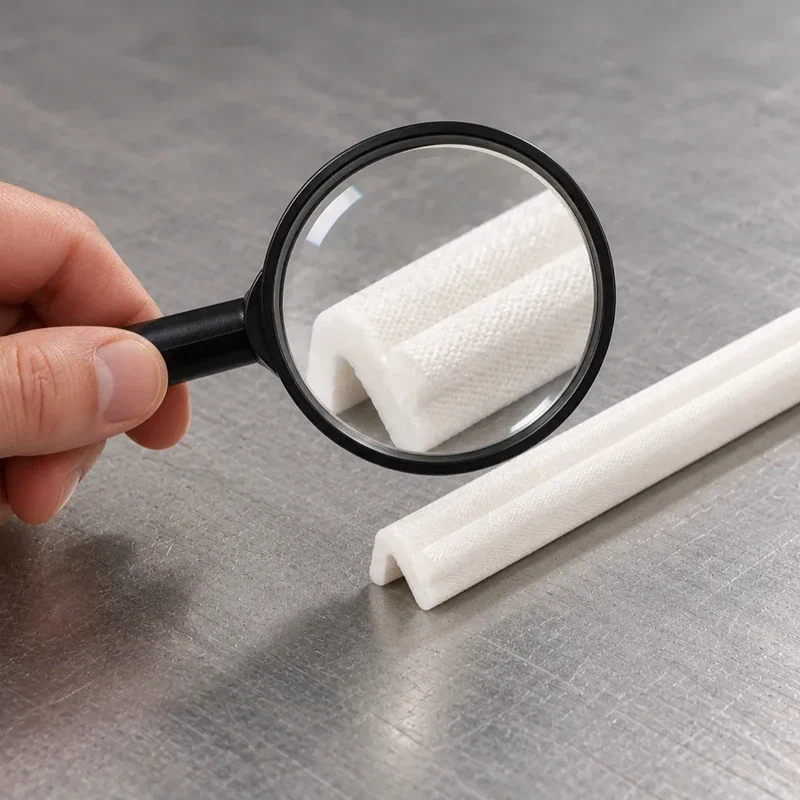
What Each Parameter Tells a Door Seal Buyer
| Parameter | What it describes | What to confirm |
| Compression set | Residual deformation after specified compression and recovery conditions | Method, specimen, deformation, time, temperature and recovery period |
| Recovery | Return toward the original shape or height after unloading | Reference height, loading history, recovery time and calculation |
| Compression force | Load required to deform a sample or profile by a defined amount | Sample length, loading direction, displacement, speed and units |
| Door operating force | Force needed to operate the assembled door under a defined procedure | Door size, hardware, measurement point, pressure conditions and test procedure |
Compression Set Measures Residual Deformation
Compression set testing examines how much deformation remains after a specimen has been held under defined compression and then allowed to recover. Under comparable conditions, a lower result indicates less permanent deformation relative to the calculation used by that method.
Do not read a 10% compression-set figure as a universal promise that a profile instantly returns to 90% of its free height. The denominator and reference dimensions depend on the test method. Material sheets, cellular foam specimens and complete coated profiles may also be tested differently.
When reviewing data from a manufacturer, identify the applicable method and specimen before comparing percentages. If two reports use different temperatures, durations or deformation levels, their headline values are not a direct ranking of the finished seals.
Recovery Depends on How and When It Is Observed
Recovery describes the return of a seal after the load is removed. A profile may recover quickly at first and continue changing during a longer rest period. Temperature and previous loading can influence the result, so an immediate observation and a later measurement answer different questions.
A recovery figure is most useful when it relates to the problem a buyer wants to avoid. A strip that stays flattened after overnight closure raises a different concern from one that recovers but makes the door hard to latch. Material test results and complete-profile results describe different specimens, so the product description and test context help explain what a quoted percentage actually represents.
Compression Force Is Different From Door Closing Force
A compression-force result belongs to a defined specimen and displacement. Changing the sample length, body geometry, wall thickness or loading direction can change the measured load. A value without those details gives the purchasing team little basis for comparison.
Installed door resistance also includes the seal contact around the perimeter, hinge geometry, latch action, closer settings and possible pressure differences across the opening. It is not valid to transfer a small-specimen load directly to the handle force of a complete door.
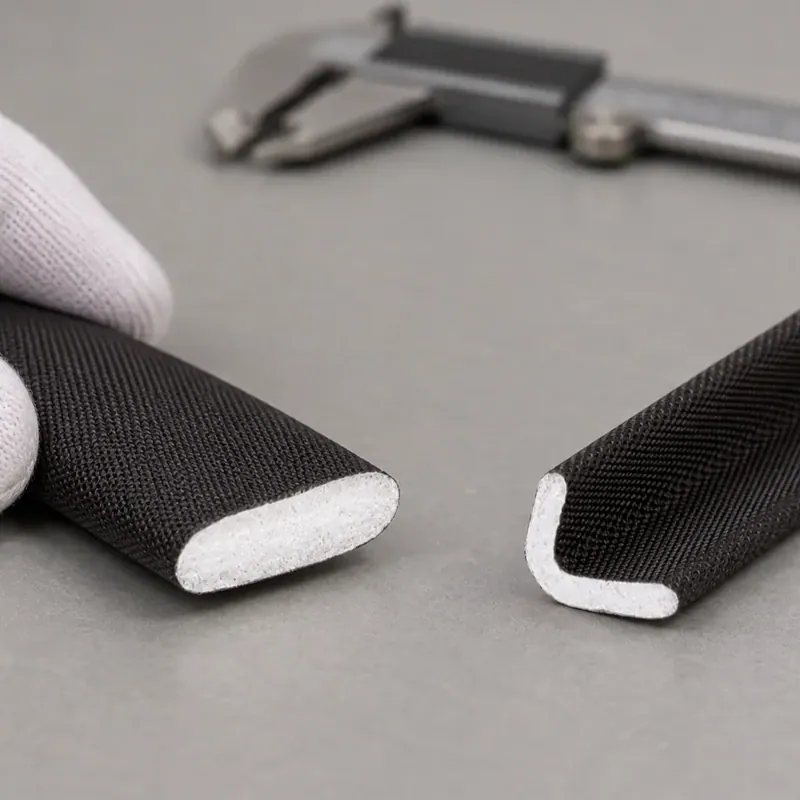
Coated PU foam profiles combine a compressible core with a protective outer film. The XHM215 wide coated PU foam seal has a 20 mm profile width and a specified clearance range of 2–4.8 mm. Its broad contact face provides a useful example of how geometry and available space affect compression behavior.
The XHM217 coated weather strip uses a 12 mm width, 8.5 mm thickness and a 3.5–5.5 mm clearance range. Both models use a PU foam core and PE coating, but their dimensions and working ranges differ. Compare each on the intended frame rather than treating a similar material description as proof of identical operating force.
Compare Supplier Reports on the Same Basis
Supplier reports are easier to interpret when they identify the material or profile, specimen dimensions and test method. Compression level, temperature, time under load and recovery interval can all affect the result. For force measurements, sample length, loading direction, displacement and units also matter. Values produced under different conditions may describe different behavior rather than a clear difference in product quality.
Use the same conditions when comparing candidate samples. Where a material test is specified, select a method appropriate to the material construction. Where a project specifies a complete window or doorset test, material data supports the assessment but does not replace that assembly test.

Check What the Numbers Mean for Your Purchase
Working gap affects how far a seal compresses when the door closes. A profile that is too large for a narrow gap can make closing feel heavy; one that is too small may leave incomplete contact. For a buyer, the useful comparison is whether the listed working range suits the opening and whether the fitted door closes comfortably. A sample can help assess fit before a larger order.
Different applications place different demands on a seal. A cabinet may need gentle contact, while a frequently used room door also needs easy latching and secure retention. Compression set, recovery and force each explain part of that behavior. None of these figures alone tells a buyer whether a particular profile will fit the frame or feel comfortable in everyday use.
Why Material Softness Alone Can Be Misleading
Softness describes how a material responds to an initial touch or indentation. It does not describe every aspect of a finished profile. A hollow body can deform through movement of its walls, while a foam body deforms through its cellular structure. Two strips that feel similarly soft in the hand may load a door quite differently.
Shape also changes the result. A thick section may need more load at the intended deflection than a smaller section of the same material. A lip can bend, a bulb can flatten and a body can roll if it is loaded in the wrong direction. The supplier’s material description should therefore be read together with the profile geometry.
For purchasing teams, separate a comfortable first impression from repeatable operation. A short sample is useful for examining the coating and general flexibility. A full frame is useful for checking how the profile interacts with hinges, corners and the latch. Both observations help, but they answer different questions.
Connect Seal Behavior With Everyday Door Problems
A door that develops a draft after remaining closed may have lost contact in one area. Residual deformation is one possible explanation, but it is not the only one. Frame movement, an uneven gap or a strip that has shifted in its receiver can produce a similar symptom. Inspect the installed position before attributing the problem entirely to the material.
A door that is difficult to latch immediately after installation presents a different question. The body may be too large for the available space, partly seated or compressed from an unsuitable direction. A highly resilient material can still create excessive resistance when used in the wrong geometry.
Visible flattening also needs context. Some deformation is expected while the door is closed. The relevant observation is what happens after unloading and whether the profile maintains the intended contact during normal use. Distinguishing loaded shape from residual deformation prevents an ordinary compressed seal from being mistaken for a failed one.
Read Test Data Without Overstating the Result
A laboratory result describes the specimen and conditions recorded in the report. It can support material selection and quality comparison, but a short test does not by itself establish a fixed number of years in service. Actual exposure, installation and use still influence the finished product.
Likewise, a percentage should not be treated as a complete description of sealing quality. A profile with favorable recovery can leave a gap if its body is too small. A securely retained strip can interfere with operation if it is over-compressed. The useful purchasing question is how the measured property contributes to the intended door application.
Product descriptions sometimes use “compression,” “compression set” and “recovery” loosely. In a quotation, an installation dimension in millimeters, a residual-deformation result in percent and a load in newtons describe different properties. Recognizing that distinction helps buyers compare the information already available without treating unlike values as a product ranking.
Balance Performance With Repeat Supply
Buyers comparing suppliers can use the approved product as a practical reference for appearance, fit and operation. The purpose is consistency, not adding unnecessary paperwork to every order. A clear product identity makes it easier to discuss a concern and distinguish a different model from a change in installation conditions.
This is particularly helpful when one distributor supplies several door manufacturers. Similar-looking seals may belong to different frame platforms. Keeping each profile associated with its intended application reduces the chance of treating a material characteristic as a substitute for actual fit.
Frequently Asked Questions
Is the lowest compression set always the best choice?
It is one useful property under stated conditions. The seal must also fit the groove, reach the contact surface, remain retained and allow acceptable door operation.
Can I compare two compression force numbers directly?
Only when the specimen, displacement, direction, procedure and units are comparable. A matching number or unit alone does not establish that two profiles will behave alike.
Does good recovery establish acoustic or fire performance?
No. Those requirements need evidence relevant to the specified assembly and application. Recovery data addresses a different part of seal behavior.
Discuss Door Seal Options With Winguard
Winguard is a China manufacturer and supplier of coated PU foam, TPE and intumescent sealing profiles. OEM and ODM options are available for different door and window applications.
Contact Winguard for product information and pricing. You are welcome to ask about products, prices or OEM customization.