You need to know how that performance was tested, which standard was used, and what door configuration was covered by the test. A seal that works in one tested doorset cannot be assumed to provide the same rating in every door.
For importers, door manufacturers, distributors, and project contractors, understanding intumescent fire seal testing standards can help you avoid unsuitable products and incomplete documentation.
Which Fire Seal Testing Standards Should You Know?
Fire Resistance of Door Assemblies
The important word is assembly.
The test is not simply asking whether the intumescent material expands when heated. Instead, the seal is installed in a door configuration and contributes to the performance of that doorset.
For this reason, when a supplier tells you that its intumescent seal has been tested, ask:
- Which door construction was tested?
- What was the door leaf material?
- What frame was used?
- What size seal was installed?
- Where was the seal positioned?
- What gap dimensions were tested?
- Was it a single or double door?
- How long did the assembly maintain the required performance?
You should then compare this information with your own door system.
When Smoke Control Is Required
Fire resistance and smoke control are related, but they are not the same performance requirement.
This becomes especially important when your product combines an intumescent strip with a smoke seal, such as a brush, fin, or flexible sealing element.
If your specification requires smoke control, request the relevant smoke-test evidence separately.
Therefore, if you are developing a new long-term product program, it is sensible to check whether EN-based evidence better matches future project requirements.
North American Projects
For the North American market, different standards and certification systems apply.
You should therefore specify the destination market before requesting quotations. A report prepared for one market may not satisfy another country’s project requirements.
What Test Documents Should You Request From an Intumescent Seal Supplier?
Request the Test Report or Certification Scope
Ask your supplier for enough documentation to understand exactly what was tested.
Your review should cover:
| Document or information | What you should check | Why it matters |
| Laboratory | Name of testing organization | Helps verify test credibility |
| Test report number | Unique document reference | Allows traceability |
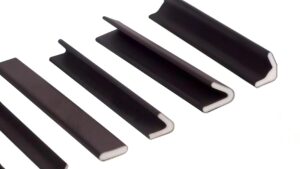
| Seal dimensions | Width and thickness | Must match the product you buy |
| Seal material | Graphite or other intumescent system | Different materials behave differently |
| Door construction | Timber, steel, composite, etc. | Performance is configuration-dependent |
| Installation position | Door leaf or frame, single or multiple strips | Placement affects results |
| Tested gaps | Door-to-frame clearances | Must relate to your application |
| Fire-test result | Tested duration and performance | Shows what the assembly achieved |
| Product identification | Model or profile reference | Connects the report to the supplied product |
The product you purchase should be identifiable against the documentation.

If the report shows a 15 × 4 mm graphite seal but the quotation is for a different 20 × 2 mm profile, you should not assume the same test result applies.
Ask the supplier to explain the scope of application.
Check the Tested Door Configuration
This is one of the most important steps in fire-seal sourcing.
Suppose you manufacture timber doors, but the supplier presents evidence based on a different door construction. Or your project uses a double-leaf door while the test covers only a single leaf.
You need to determine whether the evidence actually covers your configuration.
Check:
- Door leaf construction
- Door thickness
- Frame material
- Single or double leaf
- Hinged or sliding operation
- Seal dimensions
- Number of seals
- Seal location
- Door gaps
- Hardware
- Glazing, if applicable
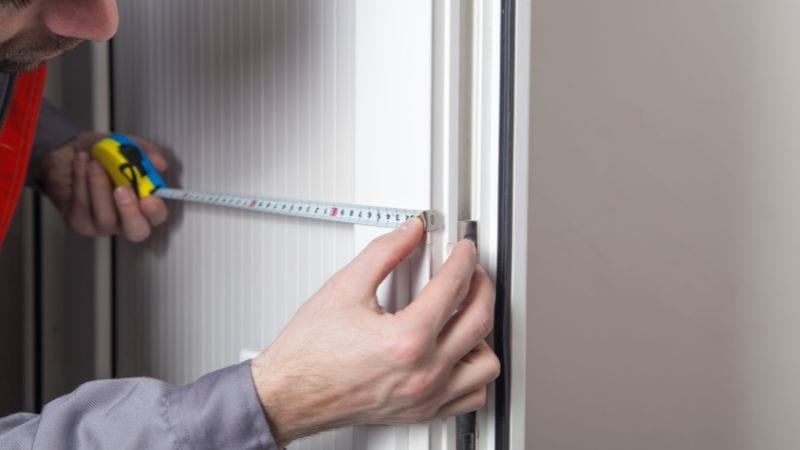
The approved configuration matters because fire doors are tested as systems rather than as collections of components.
Do not change the seal size, installation position, or quantity simply because another version is easier to purchase.
Ask for Smoke-Test Evidence Separately
An intumescent strip reacts to elevated temperature and expands to help close gaps. A smoke seal performs a different function during earlier stages of a fire.
Some products combine both functions. Others do not.
If your project specification says fire and smoke seal, make sure you receive evidence for both requirements.
Review Product Specifications and Batch Control
Test evidence tells you what a sample achieved. Production control helps you determine whether the material delivered next year will remain consistent with that sample.
Before approving a supplier, ask how it controls:
- Intumescent material formulation
- Profile dimensions
- Strip thickness
- Surface casing or coating
- Adhesive backing
- Batch identification
- Raw-material changes
- Finished-product inspection

You can also request a technical data sheet and approved sample.
Expansion temperature and expansion behavior can be useful technical information, but they should support the fire-test documentation rather than replace it.
Verify the Report Before a Large Order
For an important project, check the laboratory name, report number, product model, and tested configuration.
You should also confirm whether the certificate or listing is current where an active third-party certification program applies.
If there is any uncertainty, ask your door certification body, fire-testing laboratory, consultant, or local authority whether the evidence is acceptable for your project before ordering a large volume.
This step is especially important when you are developing a new fire-door system for certification.
Source Intumescent Fire Seals With the Right Evidence
A fire seal should never be selected only by price, color, or expansion ratio.
You need a product that matches your door construction, installation method, required performance, and target-market testing requirements.
Cooperate with Winguard for Your Next Program
Winguard manufactures intumescent sealing products for door applications and supports customized profiles and B2B projects. Send us your door specifications, seal dimensions, required fire performance, target market, and testing requirements so our team can review your application.
Contact us today to request product specifications, samples, available test documentation, or a quotation for your intumescent fire seal project.
Frequently Asked Questions
Can an Intumescent Seal Have Its Own 60- or 90-Minute Fire Rating?
You should be careful with this wording.
Fire-resistance performance is normally linked to a tested door assembly and configuration. The seal contributes to that system.
Ask what doorset was tested before accepting a statement such as “90-minute fire seal.”
Is an Expansion Test Enough?
No. An expansion test can show that the material reacts to heat, but it does not prove that a complete door assembly will achieve a specified fire-resistance rating.
You should request fire-test evidence relevant to the actual door system.
Can You Substitute a Different Seal Size?
Not automatically. Changing the width, thickness, material, location, or number of seals can affect the tested configuration.
Confirm that the alternative is covered by the applicable test or certification documentation before making the substitution.
What Should You Send Your Fire Seal Supplier?
Provide your door drawing, door material, frame construction, gap dimensions, required fire rating, smoke-control requirement, seal groove size, destination market, and applicable testing standard.