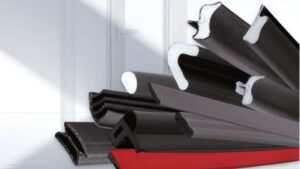
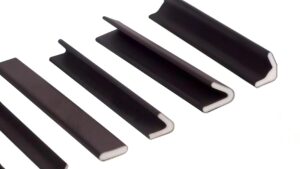
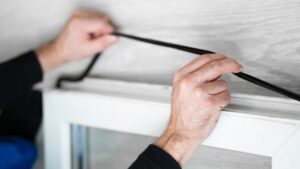
Sound control is not only about glass, wall thickness, or door leaf construction. Gaps around the opening also matter. If air can pass through the edge of a door or window, sound can often pass through that path as well.

A coated weather strip is more than a basic accessory. It is part of the total acoustic system. When you choose the right seal, you support comfort, privacy, and better building performance at the same time.
Why acoustic performance starts with sealing
When people talk about noise control, they often focus on the biggest parts of the opening. They look at door thickness, frame type, or glazing. Those parts are important, but they do not work well alone if the edges are not sealed properly.
Small gaps can weaken the whole system
A door or window may look solid, but even a small gap at the perimeter can reduce its real acoustic performance. Sound does not need a large opening to travel. It only needs a weak point.
That is why perimeter sealing matters. A coated weather strip helps close the gap between the moving part and the frame. This improves the seal line and makes it harder for sound to pass through.
This is often the simplest place to improve comfort without changing the full door or window system.
Air leakage and noise leakage are closely linked
In many projects, the same gap that lets in wind and dust also lets in noise. If you reduce uncontrolled air movement, you often support better acoustic results as well. This is one reason acoustic door seal kits are used in sound control upgrades.
Acoustic comfort affects how a space feels
In normal buildings, sound control helps with:
- Speech privacy in offices
- Better rest in hotels
- Improved focus in schools
- Patient comfort in healthcare settings
- Better living comfort in residential projects
- Reduced street noise near windows and entry doors

If your doors and windows close with weak or aging seals, occupants may notice the difference quickly. Even when the structure looks good, the space can still feel noisy.
How coated weather strips improve door and window acoustics
A coated weather strip is designed to create a tighter, more stable contact along the edge of the opening. That contact helps reduce the paths where sound can leak through.
Stable compression helps maintain sound control
One of the biggest reasons seals lose acoustic value is poor recovery. If the material compresses and stays flat, the seal line becomes weak. Once that happens, sound control drops.
Surface coating supports durability in real conditions
Acoustic performance depends on whether the material stays intact after exposure to weather, friction, UV, and moisture. If the outer layer wears too fast, the seal may stop performing well.
That matters because a seal that lasts longer can protect both energy efficiency and acoustic comfort without frequent replacement.
Doors and windows need different sealing priorities
The same acoustic approach does not fit every opening. A swing door, sliding window, aluminum frame, and wood frame all behave differently. You should match the weather strip to the real use case.

Here is a simple comparison:
| Opening type | Common acoustic issue | How coated weather strips help | What you should check |
| Entry doors | Corridor or street noise | Seals perimeter gaps around frame | Compression recovery, wear resistance |
| Interior doors | Speech privacy loss | Reduces sound leakage at closing edges | Soft close fit, consistent contact |
| Sliding windows | Outdoor traffic noise | Improves edge sealing where panels meet | Profile fit, weather resistance |
| Casement windows | Wind and exterior sound | Supports tighter closing seal | Flexibility, long-term shape retention |
Acoustic sealing works best as part of the whole opening system
Glazing, frame quality, installation quality, and wall condition also affect the result. Sound control guidance for windows makes this clear: the whole opening design matters.
Still, the seal line is one of the most practical points to improve. If the perimeter is leaking, even a high-quality door or window assembly may not deliver its full acoustic value.
What you should look for when choosing coated weather strips
If your goal is quieter performance, you should choose weather strips with acoustic use in mind. Price alone is not enough. The material needs to hold shape, resist aging, and match the opening.
Look for tested performance, not just soft material
A soft seal may feel good in the hand, but that does not prove it will work well after installation. You should ask for performance details such as:
- Compression set
- Temperature range
- Air leakage control
- Anti-aging behavior
- Wear resistance
- Noise reduction data if available
A simple chart for acoustic-focused selection
You can use this quick chart when comparing sealing options:
| Priority | Basic seal | Coated weather strip |
| Draft reduction | Good | Very good |
| Noise control support | Limited to moderate | Better |
| Compression recovery | Varies | More stable when well engineered |
| Weather resistance | Varies | Strong |
| Long-term durability | Medium | High |
| Fit for premium projects | Sometimes | Strong fit |
Upgrade Your Projects with High-Performance Sealing from Winguard
If you want quieter, better-performing doors and windows, Winguard is ready to support your project. We provide custom coated weather strips and sealing solutions for commercial and residential applications, with reliable quality, long-term durability, and strong manufacturing capacity. Contact us today to discuss your door or window system and find the right sealing solution for better acoustic comfort, weather protection, and overall performance.
Frequently Asked Questions
Do coated weather strips really help reduce noise?
Yes. They can help reduce sound leakage by sealing the small gaps around doors and windows. This is especially useful when the existing opening has weak edge sealing. Acoustic seal systems are commonly used for this purpose.
Are coated weather strips enough to fully soundproof a room?
No. They improve one important part of the system, but full acoustic performance also depends on glass, frame, door core, wall construction, and installation quality.
Why does air leakage matter for acoustics?
Because the same perimeter gaps that let air move through can also let sound pass more easily. Better sealing can improve both comfort and acoustic performance.
What acoustic features does Winguard highlight for coated weather strips?
Winguard states that its coated weather strips provide 43–45 dB noise reduction for quiet spaces, with compression set ≤10%, PE coating for durability, and stable sealing from -40°C to 90°C.
Are coated weather strips suitable for both doors and windows?
Yes. They can be used in both door and window systems when the profile and application are matched correctly. Winguard also describes long-lasting PE-coated sealing strips for both doors and windows.
How do you choose the right weather strip for acoustic use?
You should check compression set, durability, temperature resistance, fit with the opening, and any available noise reduction or air leakage performance data. It is also smart to choose a supplier with customization ability and stable quality control.