When a fire door manufacturer or project buyer needs to replace an intumescent seal, the purchase concerns an existing doorset configuration. The proposed strip has its own model, material and profile dimensions. The relevant fire performance depends on the assembly and the scope of its supporting evidence. Begin by identifying the current doorset and the seal specified for it, then compare the proposed change against that reference before committing an order.
Establish Which Doorset You Are Reviewing
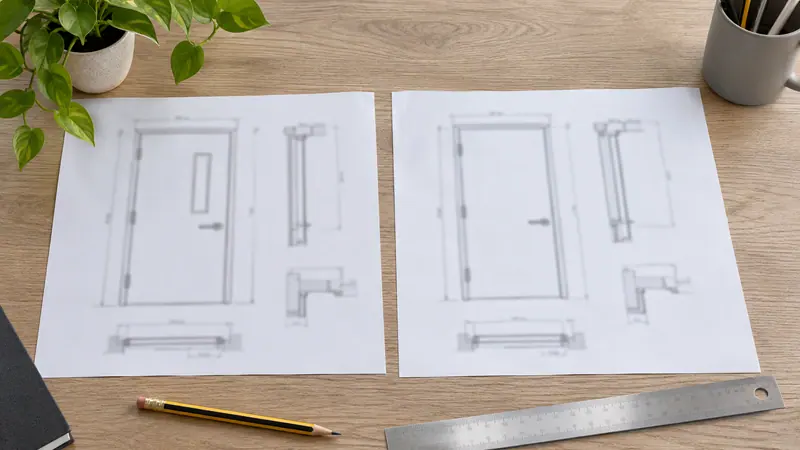
Start with the doorset drawing and the document that describes its tested or approved configuration. Identify the leaf and frame construction, whether the door uses one leaf or two, and how it opens. Keep the relevant hardware and glazing details with that reference where they apply. These features help identify the assembly covered by the evidence. A purchase description that mentions only a fire door and a seal width leaves the buyer without a reliable way to distinguish one configuration from another.
Check that the drawing relates to the door being manufactured or supplied. A factory or contractor can hold several versions of a door range, each with its own details. Record which version the purchase concerns before comparing products. If the original documentation describes more than one configuration, identify which part covers the project under review. A report number is a useful reference only when the buyer can connect the report scope to the actual door.
Find the seal in that configuration. Examine where it is placed, how many strips are used and what clearances are specified around the door. A strip in the leaf and a strip in the frame may occupy different positions relative to the gap. Likewise, a note that a product was used around the perimeter does not describe its exact placement unless the drawing or report shows how it was installed. Keep a copy of the relevant section with the product reference as the baseline for your comparison.
Identify the Existing Seal Before Evaluating a Proposal
Check the model or identifying description in the doorset documents. Where available, compare the section drawing with a physical sample. The sample helps illustrate the shape and position of the strip. The identifying information in the documents tells you which item the evidence refers to. When the physical appearance and the written specification are being used together, confirm they describe the same product and the same installation detail.
Record the dimensions, material and construction of the existing seal as described in the relevant documents. Overall dimensions identify how much space the profile occupies. The intumescent construction and any other sealing elements identify additional characteristics of the specified component. Two strips can look similar in a photograph while their bodies and materials differ. A matched colour or external width alone leaves other parts of the comparison unresolved.
If the existing strip cannot be identified confidently, flag the missing record before assessing a replacement. A photo of the installed profile can help communicate its location and appearance, but it cannot establish which tested component it represents. The doorset supplier, project team or relevant evidence holder can help identify the configuration. Resolve that identification question before asking for a conclusion about whether the proposed item can be used.
Use XHF10 as a Product Identification Example
Our XHF10 intumescent seal uses a PVC and EVA composite construction. The section is 12 mm wide and 8.3 mm thick. These details identify a particular item when the buyer reviews a drawing or a quotation. They also help distinguish it from products with a different thickness, section or material. Whether an application can use this profile depends on the documents covering that doorset.
| Information to compare | XHF10 product reference |
|---|---|
| Model | XHF10 |
| Product type | Intumescent seal |
| Material | PVC + EVA |
| Width | 12 mm |
| Thickness | 8.3 mm |
To make a purchasing comparison, put the proposed model beside the existing specification. Use the same dimensions on both sides of the comparison and note the position and number of strips on the doorset drawing. If the material or section differs, describe the difference explicitly. A reviewer can then see whether the proposal is changing the model only in the purchasing description or also changing a physical characteristic of the installed component.
A product page supports identification and dimensional review. The relevant doorset evidence addresses the assembly and its performance. A buyer should keep these pieces of information together so the person assessing the substitution can connect the proposed model to the physical change and the correct documentation. Product-specific figures about expansion or other component characteristics cannot establish the approval of a different installation on their own.

Compare Installation Position, Quantity and Clearance
For each proposed change, identify which part of the doorset it affects. If width or thickness changes, review the receiving detail and the installed section. If the strip location changes, show where it would sit relative to the leaf, frame and gap. If the number of strips changes, record that difference separately. Procurement discussions are clearer when each difference is visible rather than grouped under a general request for a similar seal.
The relevant gap dimensions belong to the doorset evidence and the actual application. Review the clearances in the section and check whether the project configuration is covered. A strip that fits into an existing groove can be compared physically with the specified component. That fit check addresses a different question from whether the documented fire performance applies to the changed assembly. Keep the physical observation with the drawing while the responsible reviewer confirms the evidence.
Also identify any other changes already made to the door or frame. For example, a buyer may be evaluating a seal at the same time as a change to the frame material, leaf configuration or hardware. List the changes separately so the review concerns the assembly that will actually be supplied. If the door includes glazing or other features described in the test documentation, keep those details visible while reviewing the seal proposal.
Verify the Scope Before Buying in Quantity
Read the relevant report or certification scope with the product and assembly references at hand. Check whether it identifies the proposed seal and whether it addresses the intended arrangement. The key question for the reviewer is whether the evidence applies to the specific doorset with the proposed change. If the relevant scope does not resolve the question, refer it to the responsible doorset certification body, testing laboratory or project expert before treating the item as approved.
If the project also requires smoke control, identify the evidence for that requirement separately. The intumescent function and the smoke-control requirement may involve different aspects of the assembly. A proposal should state which requirements need to be reviewed and which documents support them. Keeping those questions distinct helps a buyer avoid assuming that evidence for one applies to the other.
The destination market and project requirements also help determine what documentation is relevant. Include them when discussing the item. A documented result from one configuration or testing route needs to be read within its stated scope. Where the responsible reviewer needs additional information, keep the proposed item open for review rather than moving it straight into the regular purchase specification. A quotation and a technical decision can proceed on different timelines.
Describe Unresolved Differences in the Review Request
A useful review request states one difference at a time. If the proposed seal has a different section, identify the dimensions involved and show the location on the drawing. If it would be placed elsewhere in the frame, identify both positions. If the difference concerns the evidence rather than the physical item, show which part of the documentation you need the reviewer to clarify. This gives the recipient a specific question to answer and preserves a record of what is still open.
For buying teams that source for several projects, state which doorset and destination the request refers to. The same candidate seal can appear on more than one quotation, while each project may have its own configuration and supporting documents. Keep the outcome associated with the doorset review it belongs to. If a different project later asks for the same item, use that project’s own specification and evidence to frame the decision. This keeps a product reference from carrying an approval beyond its documented scope.

Keep the Review Linked to the Purchase
After the appropriate review, identify the exact model and profile dimensions on the order under discussion. Keep the ends of the comparison visible: what the doorset originally specified, what is now proposed and which assembly details the supporting information covers. If the proposal applies only to one door range or project, the purchasing reference should reflect that scope. This helps subsequent orders stay connected to the intended doorset rather than carrying the substitute to a different application by default.
Before an order is final, check that the model in the quotation is the same one the technical team reviewed. A similar description can refer to different commercial items. Keeping the dimensions and material alongside the model makes this comparison easier. For a request that still needs review, distinguish a sample or documentation request from an order for the production quantity. This gives purchasing time to establish the application reference before moving to supply.
We manufacture intumescent profiles for door applications and support B2B projects. Contact our team with the doorset reference, seal model or dimensions, installation arrangement, target market, required fire or smoke performance and estimated quantity. Share the relevant doorset documents when available so the proposed product can be identified clearly during the application review.