An OEM buyer deciding between a standard weather strip and a custom profile needs a clear view of the door or window interface. An available model can move the discussion directly to sampling when its shape, fixing arrangement and working dimensions suit the frame. A custom section becomes relevant when the required geometry cannot be met by the available profiles. The choice affects what the engineering team needs to verify and what purchasing needs to discuss before placing a production order.
Define the Requirement Before Comparing Quotes
Start with the frame or assembly drawing and identify the point where the seal will work. Record the mounting surface or groove, the direction of contact and the minimum and maximum space with the door or sash closed. Add the intended application and the opening operation. These details give a supplier enough context to discuss a product without treating a general description such as black foam strip as a complete specification.
Separate the dimensions the project must meet from the details that can still change. For a product already in production, the frame and hardware may be fixed. A seal review then has to work within the existing receiver and contact space. In a new product design, some features may still be under review. The buyer can compare a prospective catalogue profile with the current drawing and discuss whether the interface is final before committing resources to a new section.
Decide which information you already have. A clear section drawing shows the profile and its receiving geometry. An existing sample is a useful physical reference, particularly when the original drawing is unavailable. A used sample may have changed shape through wear or compression, so the actual frame and the intended fit still matter. If you have both a drawing and a sample, identify whether they describe the same revision. That makes it easier to compare an available product with the intended application.
What a Standard Profile Can Tell You
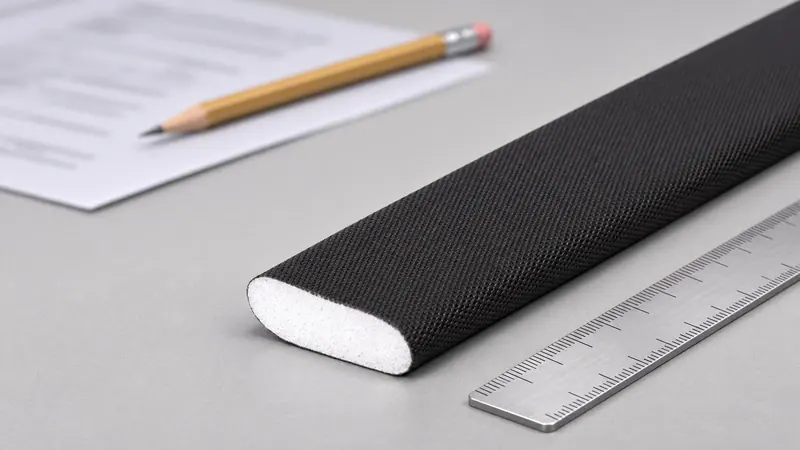
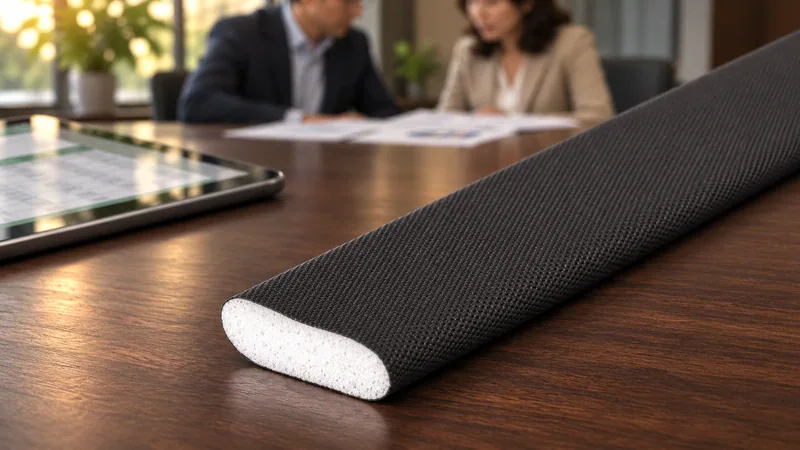
Our XHM215 coated foam weather strip illustrates how to start with catalogue dimensions. It has a polyurethane foam core with a PE coating, a width of 20 mm and a thickness of 5 mm. Its listed seal clearance is 2–4.8 mm. The profile is listed for applications including entrance doors, interior doors, windows and furniture. These facts tell the buyer what is being evaluated and provide dimensions to compare with the assembly.
| Dimension or property | XHM215 reference |
|---|---|
| Material | PE-coated polyurethane foam |
| Profile width | 20 mm |
| Profile thickness | 5 mm |
| Seal clearance | 2–4.8 mm |
Read the profile width, thickness and clearance as separate specification fields. Width describes the section across the contact face, while the listed clearance describes the intended installation space. A buyer should locate both the mounting position and the mating surface before using these dimensions to screen a design. A frame with a suitable contact space may still need a separate review of the mounting detail and the direction in which the door approaches the seal.
The next step is a sample in the assembly. Check whether the sample can be positioned as intended and how it contacts the frame or leaf during operation. Observe the corners and the points where the gap is smallest and largest. In an OEM programme, keep the sample result with the frame drawing or project reference so purchasing knows which configuration was reviewed. If that evaluation supports the existing model, request a quotation for that specific profile and your needed quantity.
An available profile can be a sensible choice when the geometry and sample results support it. Its known dimensions give the engineering team a defined starting point. If several door models use the same basic frame, verify whether their relevant sections and contact spaces are also the same. A shared product name or frame family on the commercial side does not establish that the receiving surfaces are identical in all configurations.
When to Discuss a Custom Cross-Section
A custom profile is worth discussing when the available shape does not engage correctly with the existing receiver or cannot achieve the intended contact in the assembly. Identify the part of the section that needs to change. If the mounting foot is the issue, show the receiving detail and the dimensions that govern retention. If the sealing body is the issue, show where it is intended to contact and describe the available working space. A specific fit problem gives us more to work with than a request to make the seal larger or softer.
We develop custom sealing profiles from drawings or physical samples. Cross-section, dimensions, colour, hardness and length can be discussed according to the project. If you bring a sample that already fits the frame but want a different length or colour, state that requirement clearly. If the existing sample is being used only as a visual starting point and the mounting geometry needs to change, identify those two parts of the discussion. The buyer can then ask for a proposal that addresses the actual change.
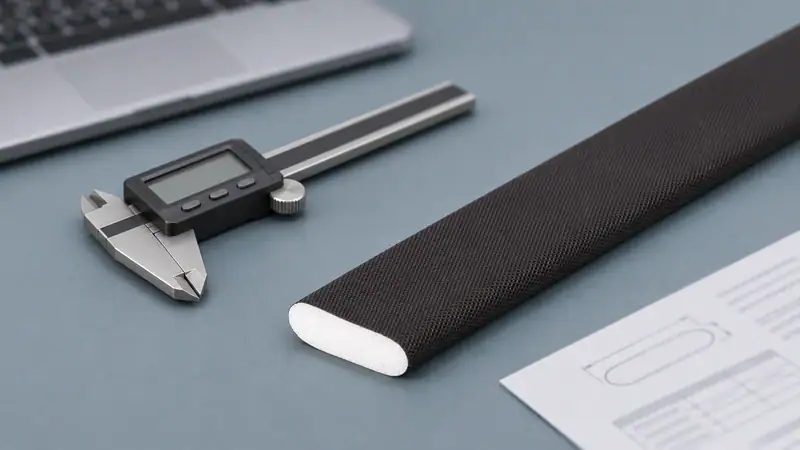
Show the uncompressed profile shape and the installed geometry where possible. The uncompressed drawing identifies the physical section to be developed. The frame drawing shows the constraints the profile needs to work within. A door drawing also helps explain how the leaf approaches the seal. Use the required tolerances to highlight dimensions that affect the fit, especially where the mounting section and the body play different roles. When a tight value has no defined function, discuss its relevance before it becomes part of a sourcing specification.
Compare the Development Work Alongside the Unit Price
A comparison between an available seal and a custom section should include the work that comes before regular orders. Our custom seal guide describes a sequence that can include drawing review, tooling, sample production, testing and any necessary adjustment before mass production. Which steps are needed depends on the project. A new extruded shape may require dedicated tooling, while an existing product can be considered on its current geometry and assessed by sampling.
When tooling is involved, ask what the quotation includes. For example, clarify whether the quoted work includes samples and how a sample revision would be handled. If tooling ownership matters to your business, raise it when discussing the order. The answer belongs to the quotation for that project. A general description of custom development cannot establish the commercial terms for a particular section or future order.
Review the initial quantity alongside anticipated demand. A trial quantity serves the sample and production review. Typical batch demand and expected annual use provide context for a repeat programme. For a custom profile, the minimum order quantity can depend on the profile, compound, colour and production setup. Ask for the quantity on the actual configuration under discussion. Compare quotations using the same units and product reference so differences in quantity do not obscure differences in the profile itself.
A development schedule should identify drawing and sample approval alongside production. The buyer may have a planned launch, but the custom specification still needs to be reviewed and the trial results understood. If the date is fixed, communicate it with the technical request and expected volume. The supplier can then discuss the proposed sequence for the actual profile, with open decisions identified before a large commitment is made.
Separate Product Changes From Order Choices
Some differences between quotations concern the profile itself. Others concern the order being discussed. A change to the mounting shape or contact body has implications for fit and sample review. A requested length or colour can be discussed with the profile reference already in hand. Keep the physical requirements on the drawing and the requested quantities and dates in the commercial inquiry. A buyer can then see whether both offers address the same part and the same demand.
When the quoted option involves a supplier-developed section, compare it with the available profile in the same assembly. Use the original application requirements as the reference and describe where either option still needs a trial. If technical and commercial discussions happen at different times, keep a record of the version that was sampled before comparing prices. A quotation for a design that has subsequently changed may need to be reviewed again. Identify the product and the drawing clearly each time you discuss a trial quantity or a production order.
Choose the Route That the Application Supports
An OEM can approach the decision as two linked questions. First, does an available model fit the receiving detail and working space in a representative assembly? Second, if a custom section is needed, can the required change be described clearly enough for drawing and sample review? Answering the first question can keep an order on an existing model. Answering the second gives the custom discussion a defined starting point.
If both routes remain viable, compare the same intended door or window assembly under each option. An available model and a custom proposal should be evaluated against the same contact, closure and mounting requirements. Keep any remaining assumptions visible in the purchasing discussion. An unresolved sample issue should stay part of the comparison until the relevant frame and profile have been reviewed.
Contact our team with the model you are considering, your drawing or sample reference, intended application, estimated quantity and required delivery date. If you already know which part of the existing profile needs to change, identify it on the drawing so we can start the discussion at the relevant interface.