Cabinet and wardrobe OEMs buy a sealing strip as part of a repeatable furniture assembly. The strip has to attach to a defined receiving surface, reach the mating surface and allow the door to operate with its intended hardware. A sample that looks suitable on a desk still has to work on the actual cabinet. Our XHM317 shows how to connect a coated foam profile to the furniture drawing and the sample trial before buying for production.
Define the Contact Point on the Furniture Drawing
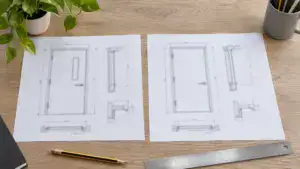
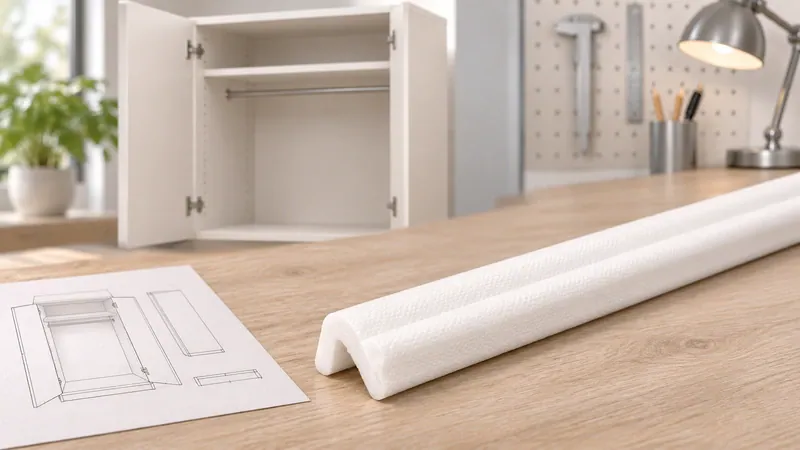
Start with the closed position of the cabinet or wardrobe door. Locate the line where the seal is meant to contact the adjoining surface. The frame, cabinet side or stop may be the receiving part, depending on the furniture design. The drawing needs to show that relationship so the buyer can check where the strip will sit and where its body will make contact. A description such as “seal for a wardrobe” identifies the application category but leaves the interface open.
Show the contact point in section. A front view identifies the door and its perimeter but may not show the position of the groove relative to the mating surface. The section view lets the engineering team see the geometry in the same direction the seal will be loaded. It also makes it possible to mark a local change, such as a difference between the top edge and the closing side, without treating every edge as though it had the same conditions.
Check the actual clearance in the closed assembly. Our custom seal guide uses the minimum and maximum gap alongside the nominal dimension. The same distinction is relevant when a seal is considered for furniture: one nominal dimension is a design reference, while the smallest and largest expected spaces tell the buyer what needs to be evaluated. Establish the intended contact line before measuring, so the reading refers to the surface that will actually load the body of the seal.
Choose a Fixing Approach That Fits the Furniture
For a groove-mounted profile, check whether the furniture design has a receiving slot with suitable width and depth. A kerf-slot seal has a mounting section that has to engage with that slot. The body of the profile serves a separate function by making contact when the door closes. A drawing can accommodate the body while leaving an unsuitable receiver for the mounting section. Review the groove and the contact space independently before ordering.
If the furniture drawing does not use a groove, a kerf-slot product needs a compatible receiver before it can be used as intended. Surface-mounted and groove-mounted strips are different fixing arrangements, as our weatherstripping selection content explains. Review the existing mounting detail before choosing a product family. This prevents a buyer from spending time evaluating a strip whose natural fixing arrangement does not match the cabinet or wardrobe design.
The finished receiving surface matters. If a cabinet uses a painted or laminated receiving piece, the finished opening is the useful reference for trial. A bare prototype and a finished production component can present different mounting conditions. Where several finish variants share a design, record which finish was used for the trial. This lets purchasing understand the scope of the sample evaluation without treating a fit seen on one specimen as a result for the whole range.
Example for a Kerf-Slot Furniture Profile
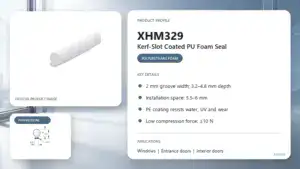
Our XHM317 coated PU foam weather strip is a kerf-slot butt seal for interior doors and furniture. It uses a polyurethane foam core with a PE coating. The groove width is 5 mm, the groove depth is 2.7–3 mm and the installation space is 4–6 mm. The first two dimensions describe the receiver for the mounting part. The installation space describes the contact clearance available to the body.
| Furniture specification question | XHM317 reference |
|---|---|
| Does the furniture drawing provide a suitable slot? | 5 mm groove width and 2.7–3 mm groove depth |
| What space is available at the closing line? | 4–6 mm installation space |
| What construction is being evaluated? | PU foam core with a PE coating |
| Which applications are listed for this profile? | Interior doors and furniture |
A furniture buyer can use these dimensions to screen a drawing. If the groove and contact clearance align with the profile, the dimensions provide a reason to proceed to sample review. If the available space is described only as the distance between two unrelated faces on the assembly, locate the actual point of contact and measure there before drawing a conclusion. The right dimension must refer to the right interface. This is especially important when the seal will be fitted out of sight and its fixing portion is hard to inspect after the cabinet is assembled.
XHM317 is one available profile. A cabinet door with a different mounting arrangement or space may call for a different profile. We support custom profiles based on a drawing or physical sample and can review cross-section, dimensions, colour, hardness and length according to the project. An OEM can discuss the existing geometry first, then decide whether to evaluate an available strip or develop a different section.
Trial the Strip on an Assembled Cabinet
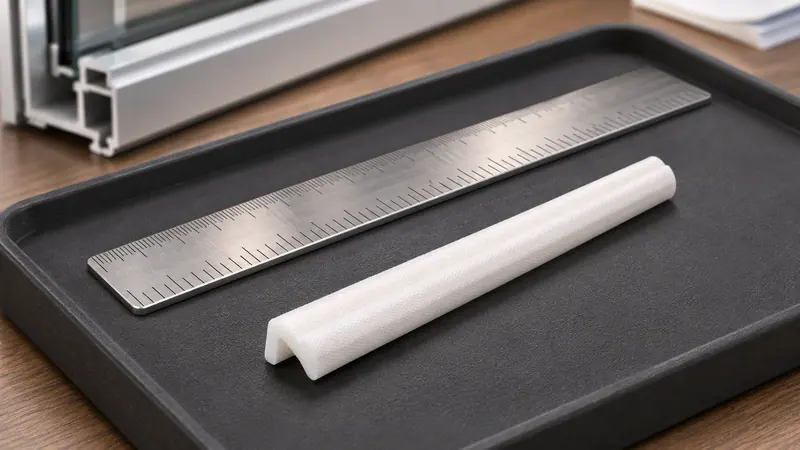
Use a representative furniture sample for the trial. Seat the strip in the intended receiver, observe its position at straight sections and check what happens at corners or where two pieces meet. The strip should stay seated while the leaf moves into the closed position. If the sample shifts as the door moves, distinguish an issue with mounting engagement from an issue with the load or direction at the closing surface. That distinction helps identify which drawing detail needs another look.
Operate the door with its intended hardware. An OEM buying for an assembled cabinet needs to know how the whole opening works with the seal fitted. A brief hand compression of a loose length can show how it feels, but it cannot show how the door will operate with contact along the full intended seal line. Watch the closing action and whether the hardware engages as expected. Look for places where the sealing body folds, twists or loses contact.
If the range includes multiple door sizes or cabinet layouts, identify which assemblies use the same receiver and contact arrangement. Size alone does not tell you whether a sample approved for one cabinet fits another. A different door or panel may close against another surface or use a different groove detail. Review the configurations where those features change and keep the trial results associated with the correct drawing reference.
Take particular care when recording the finish and colour. The profile may be concealed on some parts of a cabinet and visible on others. An approved sample allows the buyer to evaluate its appearance where it will actually be seen, as well as its fit. Record the chosen colour and the application together, especially when otherwise similar cabinet ranges have different finishes. Colour is one of the specification fields we can discuss for a custom profile.
Turn the Sample Result Into a Purchasing Reference
The sample trial is more useful for repeat orders if you can recover the information that led to the selection. Record the seal model, furniture range and related section drawing. Keep the fitted position and observations about seating and contact with that reference. When a new cabinet variant enters the range, the buyer can compare the features that matter instead of relying on the description from a previous invoice.
Add the requested profile length, colour and order quantity when preparing the inquiry. If the strip is to be evaluated for several furniture assemblies, give the relevant drawing for each distinct interface. Where a new profile is needed, include the preferred material or hardness where specified and the dimensional tolerances that matter to fit. A physical sample is also a useful starting point for a custom discussion when all the geometry is not yet available in a drawing.
For a continuing programme, distinguish an initial evaluation from a production requirement. A sample trial helps establish how the seal behaves in the assembly and whether the intended contact and closure can be achieved. Estimated production quantity and annual demand describe the commercial scope. A requested date gives the inquiry a schedule. Together, these details keep the sample discussion and the eventual order tied to the same furniture project.
Check the Same Details Across a Furniture Range
In a wardrobe programme, a buyer may need to assess several leaves and cabinet layouts rather than one isolated door. Compare the frame sections at the planned seal positions. Look for changes to the groove or the way the door meets the surface. Where a design repeats the same section, keep that reference with the range. Where the contact point moves, evaluate the sample at the new location before including the configuration in the same purchasing decision.
The same review can help when the cabinetry team hands a design over to purchasing. The engineering reference should show the receiving detail and contact line, while the purchasing reference identifies the seal, colour and length being discussed. If the sample was used to assess closing, note the cabinet and the hardware involved. Those details give the buyer a clear starting point when the next inquiry involves a related model. They also make it easier to explain where the proposed profile still needs to be checked.

Discuss Your Furniture Seal Requirement
We can review an existing furniture seal sample or discuss a profile based on the cabinet or wardrobe drawing. If you are evaluating XHM317, share the finished groove dimensions and expected installation space so the comparison can begin with the intended fit. Contact our team with the furniture application, the required length and colour, a drawing or sample reference, estimated quantity and required delivery date.