A door manufacturer may approve a coated foam seal during development and buy it again throughout a production programme. The first approval answers a question about the chosen profile in a particular door. Each subsequent order raises a different question: can the buyer identify the material supplied and explain any difference from the sample that was approved? Our batch inspections, approved-sample references and retained samples provide three different ways to connect those decisions.
What an Approved Sample Establishes
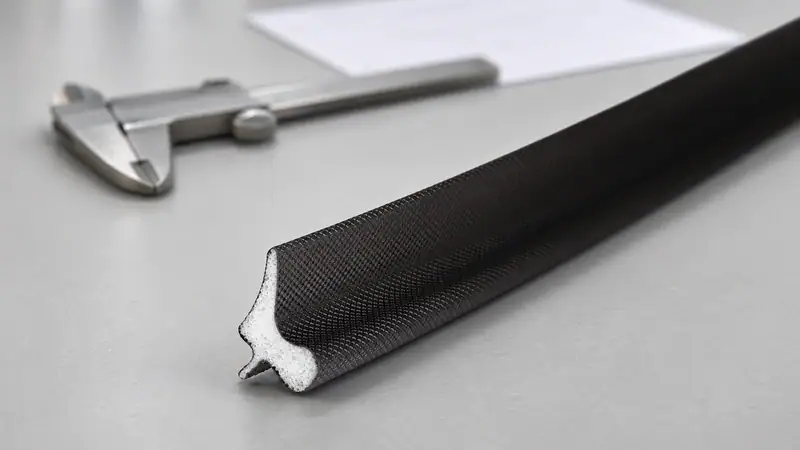
An approved sample belongs to a specific product and application. On a kerf-slot seal, the sample lets the OEM see the shape of the mounting section and the shape of the part that makes contact as the door closes. Put it in the intended frame to check how the mounting section seats, how the sealing body makes contact and how the door closes. Those observations have more value when they identify the frame that was used. A note that a strip fitted one door is difficult to interpret once several frame variants enter production.
Keep the profile dimensions and the frame dimensions separate. The mounting groove describes the space that receives the seal. The working space describes the clearance available to the sealing body when the door is closed. A sample may seat correctly in its groove and still fail to make suitable contact at the opposite surface. A sample that feels soft when held in the hand can also affect closing once it is fitted around the door. Our custom profile guide recommends evaluating the strip in the complete assembly and considering both ends of the expected gap range.
For an OEM buyer, this is the connection between sample approval and repeat orders. The sample establishes the physical profile that was evaluated. The drawing identifies the relevant geometry. The completed assembly lets the team observe fit and closing. Each of these references serves a purpose when a buyer later compares supplied material with the original approval. A colour match alone does not answer the application question, just as confirming the drawing does not replace checking the assembled door.
Use XHM325 to Identify the Profile and Its Interface
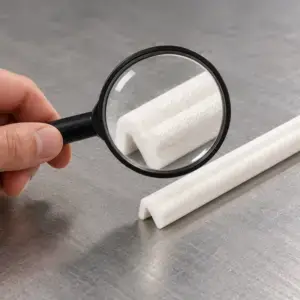
Our XHM325 coated foam weather strip is a kerf-slot butt seal for interior doors and furniture. It has a polyurethane foam core and a PE coating. The receiver dimensions are 5.5 mm groove width and 2.7–3.2 mm groove depth. Its installation space is 3–4.5 mm. Taken together, these dimensions tell the purchasing team which interface the profile is intended to suit. The product name alone gives less information about that relationship than the dimensions and the intended application recorded together.
| Reference item | XHM325 example |
|---|---|
| Model | XHM325 |
| Construction | PE-coated polyurethane foam |
| Application | Interior doors and furniture |
| Mounting groove | 5.5 mm wide and 2.7–3.2 mm deep |
| Installation space | 3–4.5 mm |
For example, if a buyer needs to investigate a seal that sits loosely in the frame, the groove is a useful point to revisit. Compare the receiver on the door under review with the receiver on which the sample was originally approved. If the seal sits securely but contact is uneven, examine the relationship between the body and the mating surface along the actual closing line. These are two distinct observations. Recording them separately gives both sides a clearer description than a single statement that the strip did not fit.
How We Carry the Sample Reference Into Production
At Winguard, key specifications such as foam density follow approved customer samples. We archive fixed formulas for mass production. This connects the approved material reference to the production work that follows it. Foam density and outer dimensions describe different aspects of a coated seal. A buyer can identify the section by its drawing and approved sample while the production team uses the material reference as part of maintaining the selected construction.
We carry out multi-step quality inspections on every batch. Our quality checks include raw material testing and material hardness testing.
There are three different records to keep in mind as a buyer. The application record identifies the door and frame where the sample was evaluated. The approved sample provides a physical reference for the profile involved in that decision. The batch information helps trace production when a query concerns delivered material. When all three can be connected, the question can be narrowed to the supply under review and its intended use. Without that connection, two visually similar profiles or two slightly different frames may be discussed as if they were the same.
What the Retained Sample and Identifiers Help Us Trace
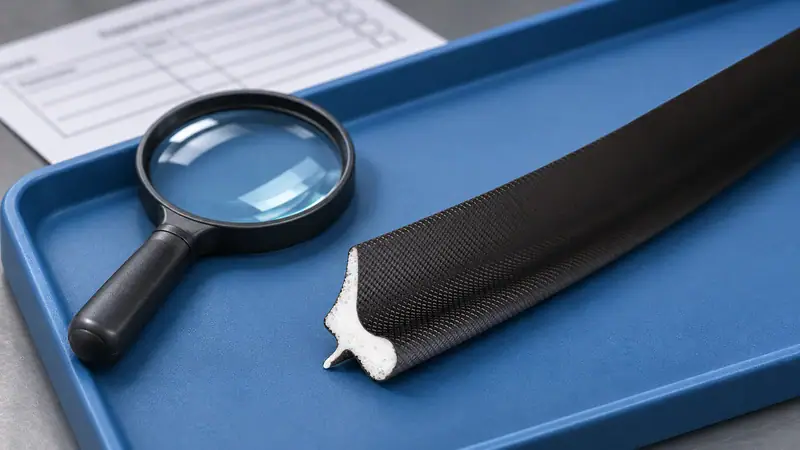
We retain a sample from each roll and label it with the batch, carton and roll numbers. These identifiers help us trace material and investigate quality issues.
Consider a buyer reviewing a door that feels different from the door used in sample approval. There may be a difference in the receiving frame, in the location of contact or in the strip being examined. The buyer can describe which door range was affected, whether the strip remains seated, and what happens during closure. The model and any available batch reference connect that observation to the seal being examined. This gives the quality discussion a starting point without attributing a cause before the parts and the assembly have been compared.
The same distinction applies to an appearance concern. A buyer can show the affected area on the strip and identify whether it is on the body, at the cut end or near the mounting section. If the issue only appeared after fitting, the position in the frame helps put the photograph in context. If the issue was visible before fitting, material from the delivery and the approved reference are useful points of comparison. Both descriptions help define what needs to be checked. Neither requires inventing a defect limit or an inspection rule for the order.
Keep the First Approval Useful for the Next Order
The initial approval becomes easier to use when the manufacturer keeps the model, application and drawing reference together. An OEM may use a single product in several applications or buy multiple seals with similar descriptions. Naming the intended frame in the approval record helps future buyers understand why the profile was selected. If a frame changes, compare the relevant dimensions again before relying on a previous fit decision. A change in geometry is a project question that can be examined with the updated drawing and a sample.
When placing a repeat order, identify the model and the specification you intend to buy. For a custom seal, the drawing, sample reference, desired length, colour and dimensional tolerances depend on the project. Expected order quantity and annual demand provide a commercial context for production. The required delivery date helps place that demand in the schedule. These are the same types of information our custom profile guide uses to frame a quote, and they keep repeat orders connected to a specific product and programme.
A buyer can keep the first sample review short while making it useful later. Describe the frame and operating arrangement, identify the boundary dimensions that mattered during trial, and record the profile associated with the result. If a new buyer takes over the account or the product is used on a second frame, the record explains what the approval covered. If a later delivery raises a question, it can be compared against the relevant sample and drawing instead of a general recollection of a previous order.
Check What the Traceability Record Can Answer
Traceability is most useful when the question is specific. An approved sample can help answer whether the buyer and supplier are referring to the same profile. The fitting record can identify the frame and hardware used in the original trial. A retained production sample and its associated identifiers can help locate the material from a particular delivery. These references address different questions, so collect the ones relevant to what you have observed.
For example, if a purchasing team is preparing a new order after a long production gap, begin with the drawing and approved sample to confirm the product it intends to buy. If the concern is limited to material already received, start with the reference for that material and the condition or fit observed. If one frame behaves differently from another, note the affected door configuration and the point on the frame where the difference occurs. The information supports a focused discussion without making the buyer assume that the profile, the batch or the frame is already known to be the cause.
For a sample trial, record both the frame groove and the closed clearance. If the sample seats correctly but the door is difficult to close, look at how the seal contacts the mating surface around the full perimeter before approving the fit.
For a custom seal inquiry, our team can work from a profile drawing or a physical sample. A cross-section shows the shape of the strip, while a frame drawing shows the receiver and the available working space. Include the groove size, expected gap range, desired length and any required dimensional tolerances. If you are planning repeat production, share the estimated order quantity and annual demand alongside the required delivery date.
Discuss a Production Order with Our Team
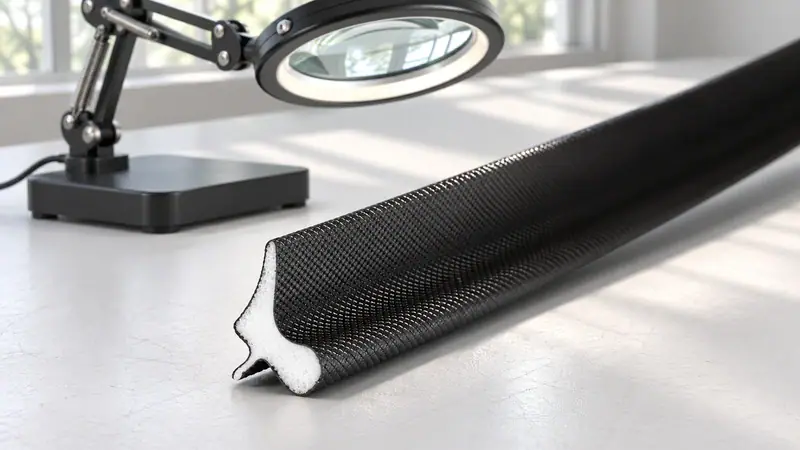
For interior doors or furniture, review XHM325 against your frame dimensions and sample requirements. For a custom profile, our team can review drawings or physical samples and support design evaluation, sampling and repeat production. Contact our team with your model or sample reference, the intended door range, estimated order quantity and required delivery date. If you are following up on material already received, include the available batch reference and describe the location and behaviour you observed in the assembly.